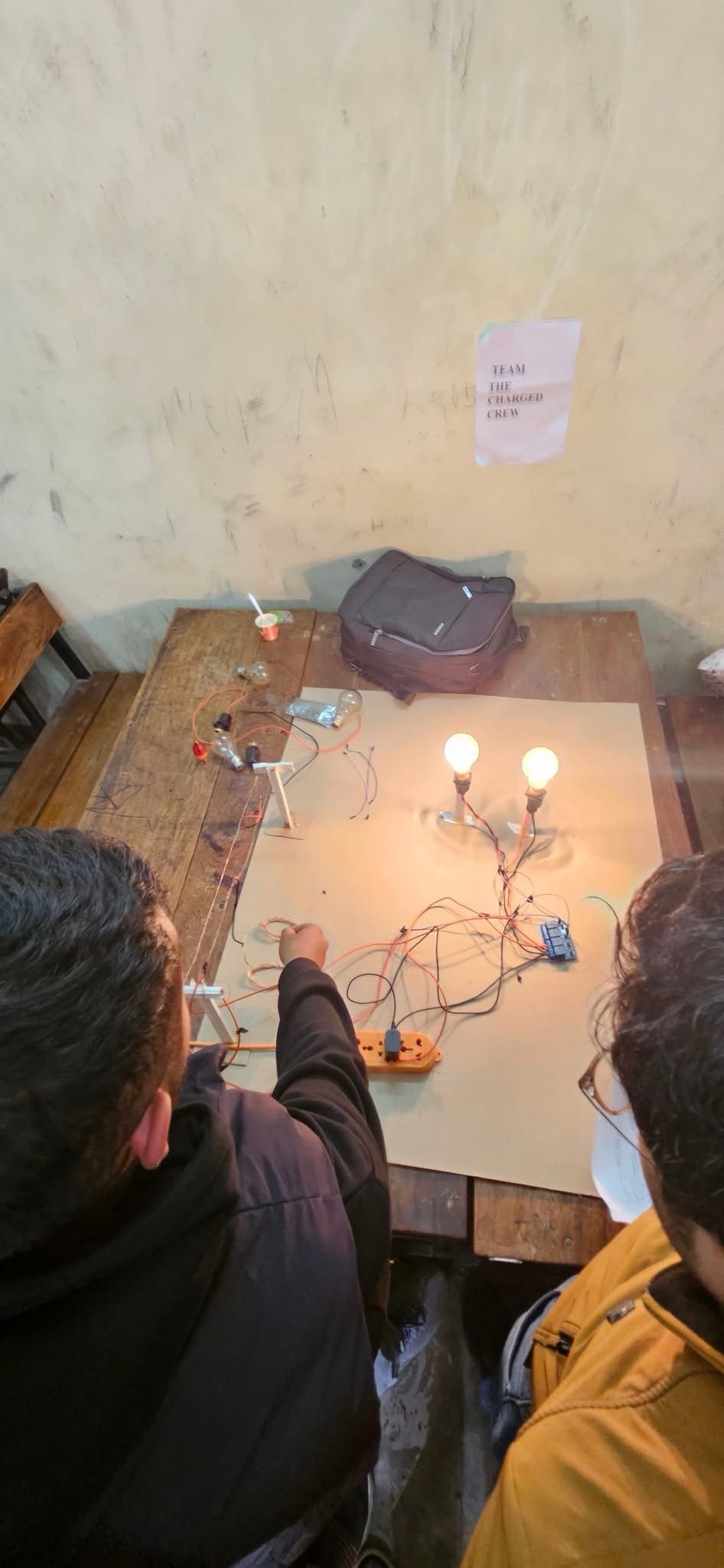
L2G Fault Detection System
Single-phase line-to-ground (L2G) fault detection system for agricultural power distribution. Built using a relay module as the core sensing and switching component. Winner of Best Emerging Team at DELTA 5.0, IOE Eastern Region Campus, Dharan.
Built in 12 hours by Bishrant Ghimire, Shishir Poudel, Adhish Paudel, and Mausham Sigdel.
Overview
Line-to-ground faults are among the most common electrical faults in single-phase distribution systems. They occur when a live conductor makes unintended contact with ground through insulation failure, physical damage to wiring, environmental exposure, or equipment malfunction. In agricultural settings, these faults are especially consequential: they can damage irrigation pumps and motors, create electrocution hazards in wet environments, and cause prolonged outages that affect crop cycles.
This system detects the characteristic electrical signature of a line-to-ground fault and isolates the affected circuit, minimizing damage and downtime.
How It Works
Normal operation: Under normal load conditions, current in the single-phase distribution line follows a predictable sinusoidal waveform. The relay module monitors this current continuously.
Fault condition: A line-to-ground fault creates a sudden, large increase in current as the fault path provides a low-impedance route to ground. This produces a characteristic surge that deviates significantly from the normal waveform, both in magnitude and waveform symmetry.
Detection: The relay module is configured with a current threshold. When the measured current exceeds this threshold (indicating a fault condition), the relay trips and opens the circuit, isolating the load from the supply.
Reset: Once the fault is cleared physically, the relay can be reset to restore supply to the circuit.
Components
| Component | Function |
|---|---|
| Relay module | Core switching and threshold comparison |
| Current transformer (CT) | Non-invasive current sensing on live conductor |
| Signal conditioning circuit | Rectifies and scales CT output to relay input range |
| Indicator LEDs | Visual status (normal / fault / tripped) |
| Reset mechanism | Manual reset after fault clearance |
Relay Configuration
The relay threshold is set based on the expected maximum normal load current for the protected circuit. A fault trip threshold is set at a multiple of this value (typically 150–200% of rated current for an L2G fault signature).
Trip threshold = k × I_rated

where k is the trip multiplier, typically 1.5–2.0
depending on the load characteristics and fault
impedance expected in the application.
Threshold calibration involved measuring normal operating current under various load conditions and setting the relay pickup point above the peak normal current but below the minimum expected fault current.
Key Design Decisions
Relay-based approach vs microcontroller-based: Using the relay module as the primary detection element keeps the system simple, robust, and low-cost. There are no firmware dependencies, no power supply requirements for a microcontroller, and no software failure modes. For agricultural deployment where maintenance may be infrequent and conditions harsh, this matters.
Threshold sensitivity: Too sensitive: nuisance tripping under normal load surges (motor starting inrush, sudden load switching). Too insensitive: fault current not detected before damage occurs. Calibration is specific to the load being protected.
Response time: The relay operates in the sub-cycle range for large fault currents, providing fast isolation before sustained fault current can cause thermal damage to wiring or connected equipment.
Limitations
This system targets bolted or low-impedance L2G faults where fault current is substantially larger than load current. High-impedance faults (where the fault path has significant resistance, such as a wire touching dry soil) produce smaller current deviations that may not trigger the relay. High-impedance fault detection typically requires more sophisticated signal processing.
The system also does not distinguish between a genuine fault and a large but legitimate load surge. Calibration and installation context matter.
Potential Improvements
- Current waveform analysis (microcontroller + ADC) for high-impedance fault detection
- Automatic reclosing with fault persistence check
- Data logging for fault event history
- Remote notification via GSM/LoRa for unattended agricultural sites
- Extension to three-phase distribution systems
Competition Context
Built at DELTA 5.0, Electric Grid Hackathon. Theme: Technology in Agriculture and Innovation. IOE Eastern Region Campus, Dharan, Nepal. Duration: 12 hours.
Awarded: Best Emerging Team.
Team
- Shishir Poudel
- Adhish Paudel
- Mausham Sigdel